How to Plan Your Wedding Timeline for Better Photos and More Relaxed Moments
A well-planned wedding timeline can make a significant difference in how smoothly your celebration unfolds and how naturally your photographs come together. From getting ready in the morning to the final dance at night, giving each part of the day enough time can reduce stress and create more opportunities for meaningful images. Working with an experienced wedding photographer Buffalo NY during the planning process can also help you build a schedule that balances photography with time to enjoy your celebration.
Why Your Wedding Timeline Matters for Photography
Wedding days rarely follow the clock perfectly. Hair and makeup may take longer than expected, guests may arrive early, or transportation can be delayed.
A timeline with reasonable flexibility helps prevent small delays from becoming major problems.
Photography is particularly affected by timing because many important images depend on specific moments. Family portraits require everyone to be available, while outdoor couple portraits may depend on natural light.
Rather than squeezing photography into small gaps, consider it an important part of the overall schedule.
Start With Your Ceremony Time
One of the easiest ways to build a wedding timeline is to work backward from the ceremony.
Determine when guests should arrive, when the wedding party needs to be ready, and how much time is required for transportation.
If you are planning a first look, the schedule may look different from a traditional ceremony where the couple doesn’t see each other beforehand.
Discuss your preferred ceremony format with your photographer and other vendors before finalizing the timeline.
Allow Enough Time for Getting Ready
Getting-ready photographs can provide an important beginning to your wedding story.
However, these photographs work best when the room isn’t overly rushed or crowded.
Consider allowing additional time for:
- Hair and makeup
- Getting dressed
- Accessories
- Individual portraits
- Family interactions
- Wedding party photographs
- Final preparation
If possible, have important details such as invitations, rings, shoes, jewelry, and other accessories ready before the photographer arrives.
This can make detail photography more efficient and give everyone more time to prepare.
Consider a First Look
A first look can change the structure of your wedding day.
Instead of waiting until after the ceremony for couple portraits, you can schedule them earlier. This may also allow you to complete some wedding party or family photographs before the ceremony.
For some couples, the first look is also a meaningful private moment before the celebration begins.
It isn’t right for everyone, though. Couples who prefer a traditional first meeting at the ceremony can structure their timeline accordingly.
The important thing is choosing what feels comfortable for you.
Schedule Family Portraits Efficiently
Family portraits can take longer than expected if there is no plan.
Before the wedding, create a list of essential family combinations and share it with your photographer.
For example:
- Couple with both parents
- Couple with each set of parents
- Couple with siblings
- Couple with grandparents
- Couple with immediate family
- Couple with the wedding party
Keep the list focused on photographs that are genuinely important.
It can also help to designate a family member who knows everyone involved. They can help locate relatives and keep the session moving.
Don’t Forget the Wedding Party
Wedding party photographs are another important part of the timeline.
Rather than spending an excessive amount of time on dozens of combinations, decide which photographs matter most.
Include a mixture of traditional group photographs and more relaxed images that reflect the personalities of the wedding party.
Your photographer can often suggest efficient ways to organize these photographs based on the size of your group and the available location.
Leave Room for Couple Portraits
Couple portraits deserve enough time to avoid feeling rushed.
This is an opportunity for you to step away from the activity and spend a few quiet minutes together.
Consider scheduling portraits at more than one point during the day.
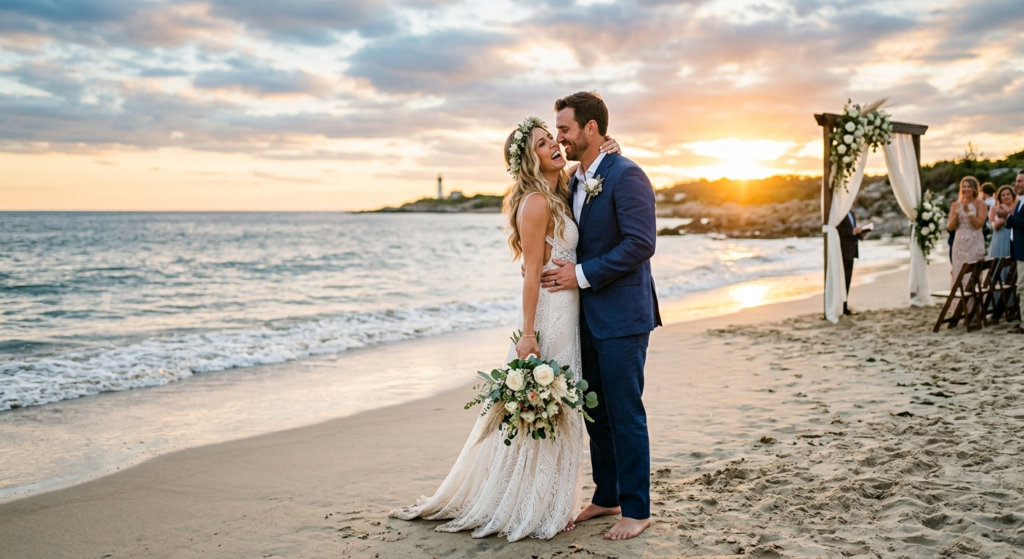
For example, you might take formal portraits earlier and then plan a short session during golden hour when outdoor light becomes softer and more flattering.
A flexible approach can produce a wider variety of photographs without taking you away from your guests for too long.
Plan Around Natural Light
Lighting can have a major influence on photography.
Outdoor portraits during harsh midday sunlight may look very different from photographs taken during the softer light around sunrise or sunset.
Ask your photographer about the lighting conditions at your venue and the approximate sunset time on your wedding date.
This information can help determine the best time for couple portraits.
If your ceremony or reception takes place indoors, discuss available windows, artificial lighting, and venue restrictions in advance.
Build in Buffer Time
One of the simplest ways to create a more relaxed wedding day is to leave gaps between major events.
If you think transportation will take 20 minutes, consider allowing additional time.
If family portraits are scheduled for 30 minutes, avoid immediately placing another important event afterward.
Buffer time gives everyone room to breathe when something unexpected happens.
It can also create opportunities for candid photographs that weren’t originally planned.
Give Your Photographer a Detailed Schedule
Once your timeline is finalized, provide it to your photographer.
Include:
- Ceremony location
- Reception location
- Getting-ready location
- Transportation times
- First-look plans
- Family portrait schedule
- Reception events
- Special traditions
- Sunset timing
- Important people or moments
If there are surprises planned for your partner or guests, make sure the photographer knows when appropriate.
This allows them to prepare without revealing the surprise.
Think About Your Guests, Too
A wedding timeline should work for guests as well as vendors.
If there is a long gap between the ceremony and reception, consider how guests will spend that time.
Likewise, avoid scheduling an extremely long portrait session that leaves guests waiting without activities.
Your photographer and planner can help you create a schedule that balances photography with the overall guest experience.
Rochester, Buffalo, and Syracuse Weddings
The location of your wedding can also influence the timeline.
Couples planning wedding photography Rochester NY celebrations may have access to historic venues, gardens, urban locations, and surrounding countryside.
Those organizing events in Western New York may be researching wedding photography Buffalo NY, where waterfront and architectural settings can offer distinctive backdrops.
In Central New York, couples interested in wedding photography Syracuse NY may also have a range of indoor and outdoor venue options.
Regardless of location, discussing the venue and timeline with your photographer early can help identify practical considerations.
Keep the Schedule Flexible
A wedding timeline is a guide, not a guarantee that everything will happen at exactly the scheduled minute.
The goal is to create enough structure to keep the day moving while leaving room for unexpected moments.
Some of the best photographs happen when the schedule briefly pauses—a spontaneous conversation, an emotional embrace, or a few quiet minutes between events.
Don’t let the timeline become another source of stress.
Final Thoughts
A thoughtful wedding timeline can make photography easier while giving you more time to enjoy the people around you. Start with the ceremony, allow enough time for preparation and portraits, consider lighting conditions, build in buffer periods, and communicate the schedule clearly with your photographer.
Most importantly, leave room for the unexpected. Your wedding day won’t be perfectly predictable, and that’s part of what makes it yours. A flexible timeline gives your photographer the opportunity to capture both the planned highlights and the spontaneous moments that ultimately tell the complete story.